
Work. Time spent and time regained.
With the time regained from rigid project deadlines and office demands, purposeful work fills my life. I ask myself: is this how I want to spend the time I have left on earth?

September 2023: I look at the calendar and an extraordinary realisation hits me. I have been working for 50 (five-oh) years. A chunk of life marked by epochal shifts: from analog to digital to AI.
My early times at work were redolent of hierarchy and authority that went undisputed, times of strictures, times thankfully gone. I have since traversed many universes. I have worked with global companies. I have launched entrepreneurial ventures – scattered spurts of energy to inject fresh learning. I have travelled and studied. Always, I have returned to familiar corporate environments ready to go further, deeper, higher.
Work has given me the means to build security and comfort. In turn, I have given work creativity and much effort.
What we do at work builds relevance, visibility, and purpose in later life. I have kept relevant to the marketplace and built relationships - not transactions. I have mentored talent, on the intuition that little matters more than nurturing the younger generations to dream their dreams and up their game.
Inspiration strikes
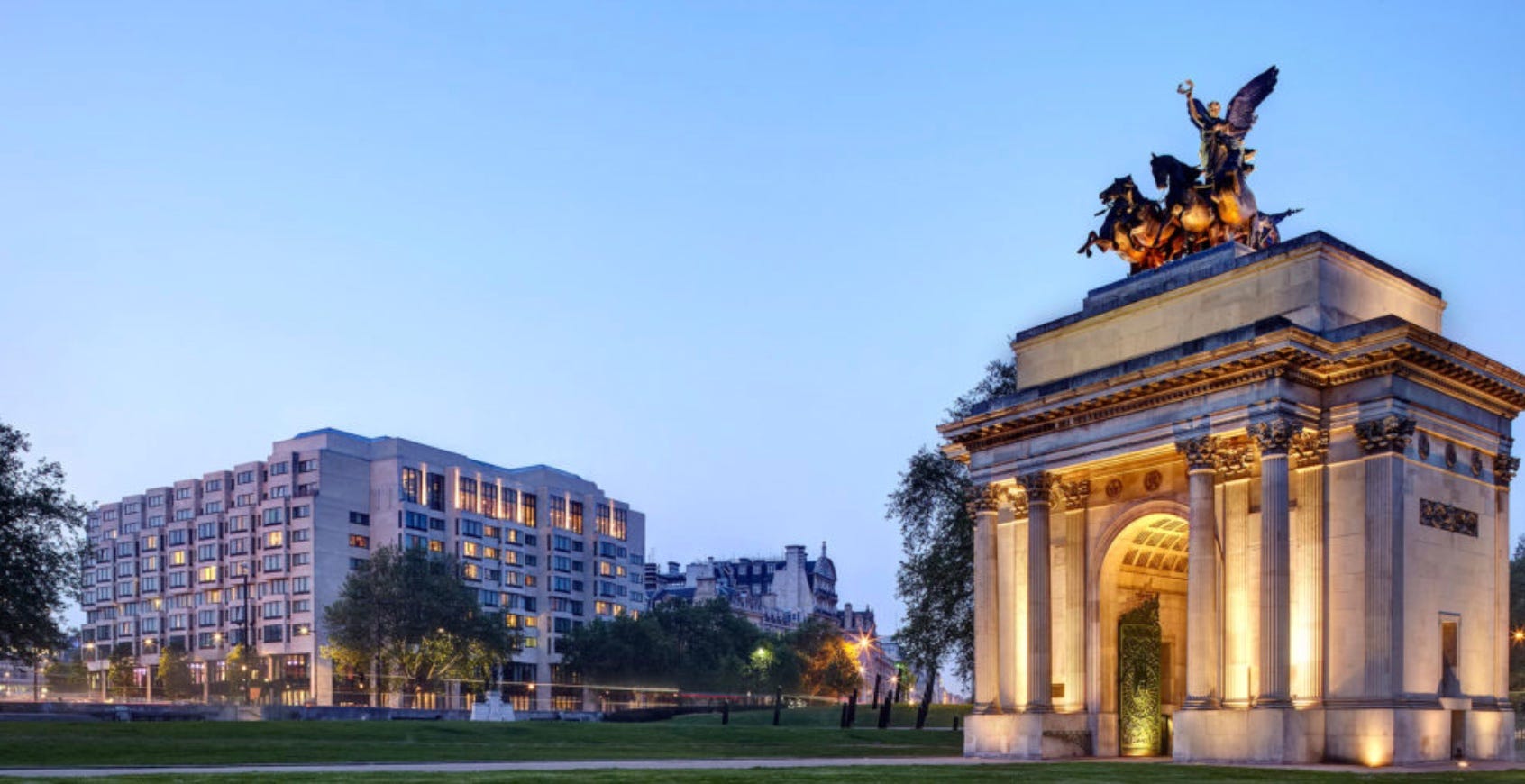
A step back in time, to the early 1980s, at the Intercontinental Hotel on Hyde Park Corner. My first job in London as a newly landed immigrant, a newbie to the big city, marvels everywhere. Here they come: two senior women meeting the finance director – a daily in-person meeting, in those analog days. One, loud hellos generously distributed along her way. The other, confident, a glorious smile - and clothes to die for.
These women had a senior job, a big personality, and evident fun too. I wanted a good job, I wanted to be loud, I wanted to look smart!
It’s surprising what can inspire you. As a young radical feminist, my inspirations were two businesswomen – senior, yes, but also loud, stylish – and fun.
Keeping relevant
During my now 50+ years at work, I have consistently, obsessively, asked myself: where is work heading? And have built the skills to get me there.
I moved to London as a young woman, in the knowledge that the English language would open up the world I wanted to see so badly. I worked in IT to understand the digital ecosystems springing up everywhere. I moved to business consulting, in the knowledge that democratically engaging people onto corporate transformational strategies is the way to deliver them. I studied Chinese – earnestly but unsuccessfully!1 – in the knowledge that speaking Chinese and learning about China might be essential – one day. I always pragmatically built on what I already knew – and moved forward from there. To this day, curiosity consumes me.
All this has created the purpose that fires my life. I work differently now: advising, mentoring, planning an educational charity. With the time regained from rigid project deadlines and office demands, more purposeful work fills my life.
With a smile, life is better
It is the human relationships that carry us through work.
In a recent project, the first minute of every call with two senior leaders was spent… laughing – such was the pleasure of working with one another. The pleasure of our accomplishments and the anticipation of more to come. It was beautiful – and our collaboration devastatingly effective.
I have turned transactional relationships at work into human ones. The rest has been easier. It has meant working with people I trusted and that trusted me, in a collaborative and infinitely more fun environment.
I have also mentored, by inclination and unfailingly, the young talent. Mentoring could easily be the boring, soulless practice encoded in boring, soulless coaching manuals. But mentoring is nurturing. It’s passing on what we know and what we cherish – not least the values of integrity with which we have navigated work. This passing on, this distribution, is life-enriching. Through our working together, younger colleagues have found their way, dreamt their dreams, mapped their journey – confident and fearless.
A curated third phase
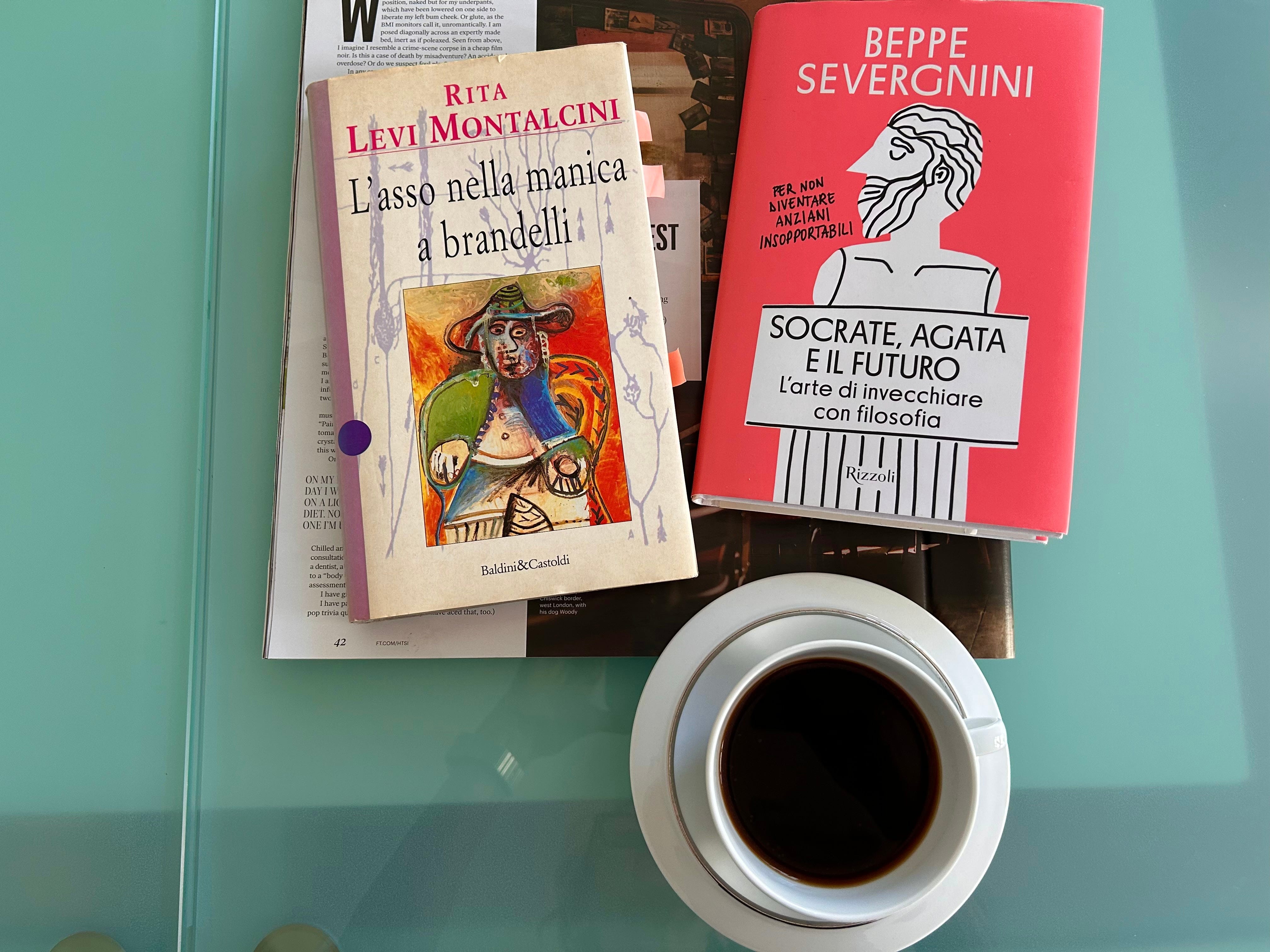
In his meditation on aging and the passage of time2, Italian journalist and author Beppe Severgnini writes about the Hindu’s ashrama doctrine that divides human life into four periods:
“[…] the first serves for learning, guided by a teacher; the second for realising oneself; the third for teaching and transmitting knowledge; the last, marked by a progressive detachment from material things, to prepare for farewell”.
This aligns well to Rethinking Age – life as progression, not decline, life as achievements to be shared. Severgnini also warns us of the selfish pursuit of work-gratification in our third phase – it is this egotism, not the years, that make us age.
This book has helped me think more clearly about my life now. Because of it, I ask myself: is this how I want to spend the time I have left on earth?
My criteria for saying yes to work have fundamentally changed. Purpose, not necessity, drives my choice. And I am thankful every day about the luxury of being selective. I weave work into life in the knowledge that what my experience brings is astounding: expertise and wisdom.
Age has an ace up its sleeve
So writes Rita Levi Montalcini in her L’Asso Nella Manica a Brandelli3, one of the most impactful books on age I have read. Her scientific credentials are unimpeachable: in 1986, she is awarded the Nobel Prize in Physiology or Medicine.
Rita Levi Montalcini provides the hard science for what I argue based on experience.
The brain, a ‘stupendous mechanism’4 of unimaginable complexity, doesn’t suddenly become obsolete as we age. She writes of the ‘commitment, courage and creativity’ in the work of Michelangelo, Galileo, Picasso that remained unchanged in the final period of their ‘long journey’. She writes of Einstein’s ‘attitude of wonder’ that persisted throughout his life until he died at age 76, absorbed in cutting edge scientific research.
Curiosity and intellectual vigour do not diminish with age: the brain finds new strategies for confronting challenges.
I know. As I moved into later life, I have often experienced a sense of compensation. If I am still quick at coming up with solutions, working with clever young colleagues, it is because I have encountered those challenging conditions tens, hundreds of times, and made excellent use of the experience.
Continuing to work, in whatever form we choose, provides the stimulation that keeps neural plasticity alive.
‘What will survive of us is love’
What matters is doing good work and maintaining perspective, mindful of the temporary nature of power and status.
Severgnini reminds us that what we become depends on us and what we do in the third phase of life. As I witness the passage of time and the generational flow of knowledge, I think this is my legacy, this is what I will be remembered for. ‘What will survive of us is love’5.
Look at the way work unites different generations! How inspiring! A brother, then a niece and a nephew, have brought forth the master building skills that my grandfather was practicing and teaching, in Europe, a century ago. And with life’s beautiful flow, there may yet be more children, nieces, nephews who will carry these skills forward.

I dream now
The entrepreneurial culture of Italy is in my DNA and has accompanied me through life.
And what of the two women who inspired my younger self? I have had good jobs. Am I loud? Fun? Am I fabulously dressed? I don’t know – ask my colleagues, ask my friends – look at my wardrobe.
What I do know is that, as a young woman, in a socio-economic and cultural context that valued hard work but not education for girls, I didn’t know I could dream to become who I wanted to be. Now I do. And I want to be someone that says something novel and affirming about age, rethinking the way we choose to spend our regained time on this planet.
As support flies in to Rethinking Age from friends, colleagues, new connections, I know I am onto something.
My inspiration now, unsurprisingly, is Rita Levi Montalcini who created a life that served both knowledge and humanity. She overcame much adversity, continued conducting original research past the age of 100 and expanded her life to encompass education, women’s rights and global humanitarian causes. She died aged 103, acknowledging that her life had been enriched by human relations, work and interests - and never feeling lonely.
Age doesn’t narrow possibilities but expands them through wisdom and freed-up mental resources. And doesn’t lead to loneliness.
I wish everyone a third phase rich and beautifully expansive,
Fx
References
My Mandarin? 不如不说. Better left unspoken - DeepSeek suggests dismissively.
‘Socrate, Agata e il Futuro - L’arte di invecchiare con filosofia’. Beppe Severgnini. Rizzoli. 2025. As at the time of writing, the English translation is not yet available - no doubt it will very soon be. Translation provided by Claude Sonnet 4 - and validated by me.
‘L’asso nella manica a brandelli’. Rita Levi Montalcini. Baldini&Castoldi. 1998. Regretfully only available in the original Italian. As in the book above, translation is provided by Claude Sonnet 4 and validated by me. The expression in the title is derived from The Collected Poems of W.B. Yeats (MacMillan Publ., 1933):
An aged man is but a paltry thing. / A tattered coat upon a stick, unless / Soul claps its hands and sing, and louder sing / For every tatter in its mortal dress.
‘Stupendo congegno’ as Rita Montalcini describes the brain [p. 25]. A description that bears witness to the beautiful writing of this beautiful scientist. In the cortical layer of the human brain, a million billion connections, known as synapses, are estimated to be present. If we were to count one connection per second it would take 32 million years to do so - says the neurobiologist G.M. Edelman [p. 28].
This is from the epigraph to Chapter 10 ‘Socrate, Agata e il futuro’. [p. 189]. ‘What will survive of us is love’ is from Philip Larkin’s poetry collection The Whitsun Weddings published in 1964.
Beautifully composed.
So much to digest here Francesca...experiences, passion and wisdom shared.
''To this day, curiosity consumes me.'' ...love this Francesca ...and something we should and I hope to embrace daily...keep them coming..!
I’d love to chat with you offline - I feel we come to life’s passages via similar routes. A question: how do you define the “third phase?” Thanks.