

Age: Poverty / Privilege
The beauty of age is beautiful only under specific socio-economic and cultural conditions. Poverty / privilege: the battle lines of this most unjust of fights.

Optimism, sunniness, strength, rooted in traversing universes from disadvantage to privilege, power my writing and give hope. For exactly one year I have written about ageing as beauty, age as dignity, age as expansion.
My optimism is earnest – and real.
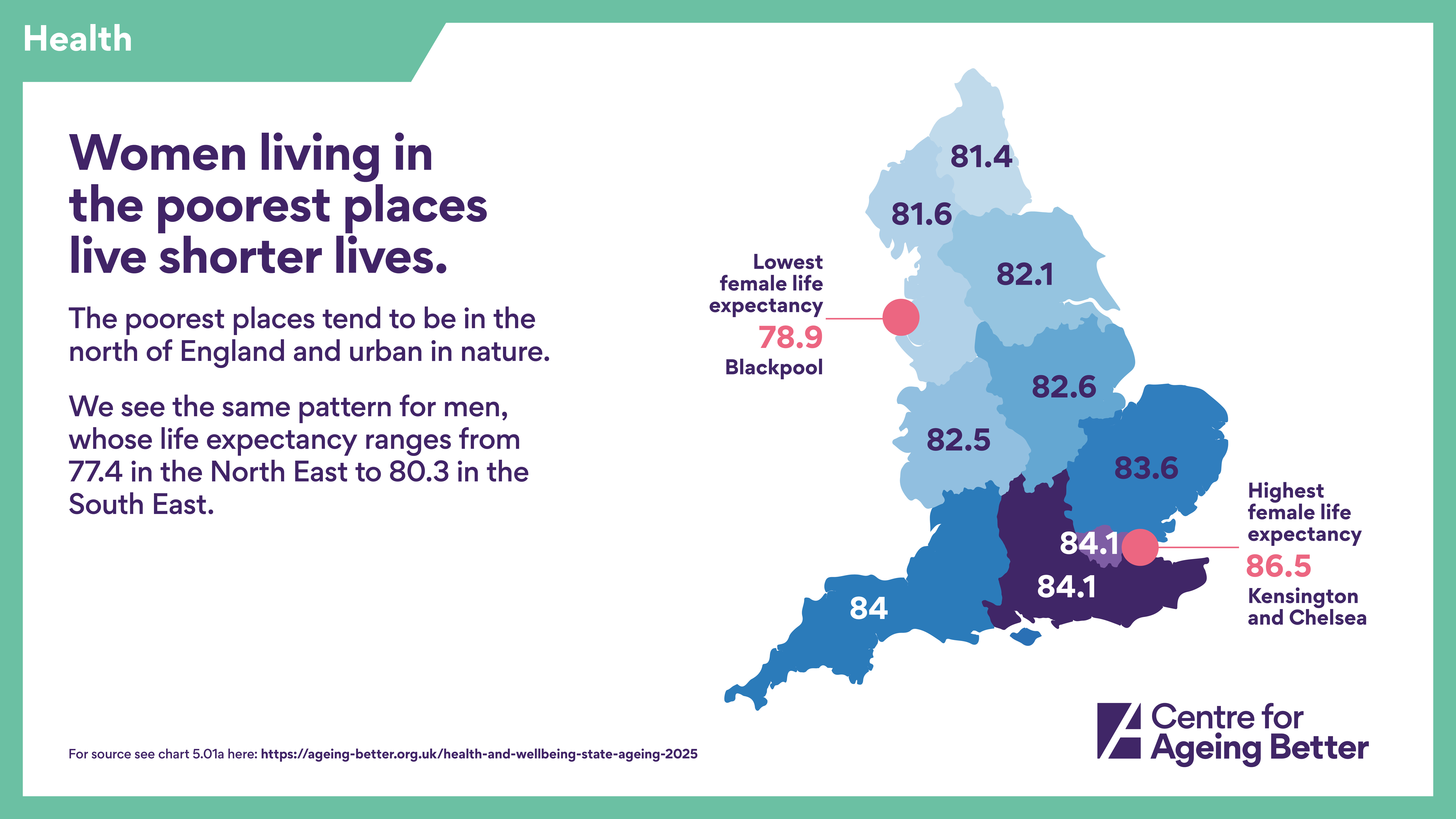
I read the Centre for Ageing Better’s State of Ageing 20251 and recognise a reality I see around me:
[…] millions more of us are living into our seventies, eighties, nineties and beyond, in good health, working for longer and supporting our communities through volunteering and caring.
Then:
[…] this rosy picture of ageing is unobtainable for many, such as those who are living in poor housing, in poverty and poor health, and who are isolated from their communities and society.
The North-South health divide is particularly stark […].
My optimism crashes. A collision. A pile-up of certainties that I may have been naïve not to expect.
The Centre for Ageing Better (CAB) report shreds my optimism. Its data does not argue. It indicts2.
This is England
17% of pensioners live in relative poverty - rising to one in five amongst people over 85.
2.3 million people aged 55 and over live in non-decent homes - damp, cold, hazardous. A woman in her sixties in Middlesbrough describes her house as freezing cold, her rheumatoid arthritis made worse by the cold she cannot afford to escape.
A present of inescapable poverty emerges. A woman in her sixties in Knowsley has been working since the age of sixteen. She is 62. She opted out of a workplace pension decades ago when life is seen through ‘rose-coloured glasses’ and you think you won’t be working in your sixties. With healthy life expectancy in decline, her later years may not be spent in good health.
A future with no hope. 50% of disabled people have no private pension savings by the time they reach 60. The precarious financial picture is deepened by un/underemployment. Women aged 45 to 60 are seven times more likely than men to have left – or consider leaving – the workforce before the state pension age to care for children or grandchildren. Caring roles, low-paid roles that interrupt careers. The consequences follow them into old age: greater poverty, less agency.
A reality of self-directed ageism. Under the weight of stereotype people internalise diminishment, diminution, decline. A third of people aged 50 and over have avoided a social activity because of it. Nearly a quarter have not sought help for a health complaint.
The North-South divide, a focus of the report, is a determinant of life expectancy, health, employment, housing. All worse in the North and in urban areas of deprivation.
And more.
This is ageing in England. No beauty, no dignity, no expansion emerge from the CAB research.
This is the United Kingdom. A wealthy economy, sixth in the world by economic indicators. Yet an unequal economy drifting back to Dickensian hard times3.
The data does not reflect anomalies hitting England randomly. It points to persisting patterns, woven deeply into society.
The report is careful in how it sets out its data. I am not obliged to be so in how I respond to it: this is a moral disgrace and a stain on all our souls.
How could I!
And how did I – how could I! - write essays celebrating ageing without seeing that ageing is beautiful only under specific socio-economic and cultural conditions?
My recognition of the destruction age stereotype wreaks on older people, resulting in the sharp answers I give when I encounter it, is an illustration of fearlessness – and privilege. I wrote about it in:

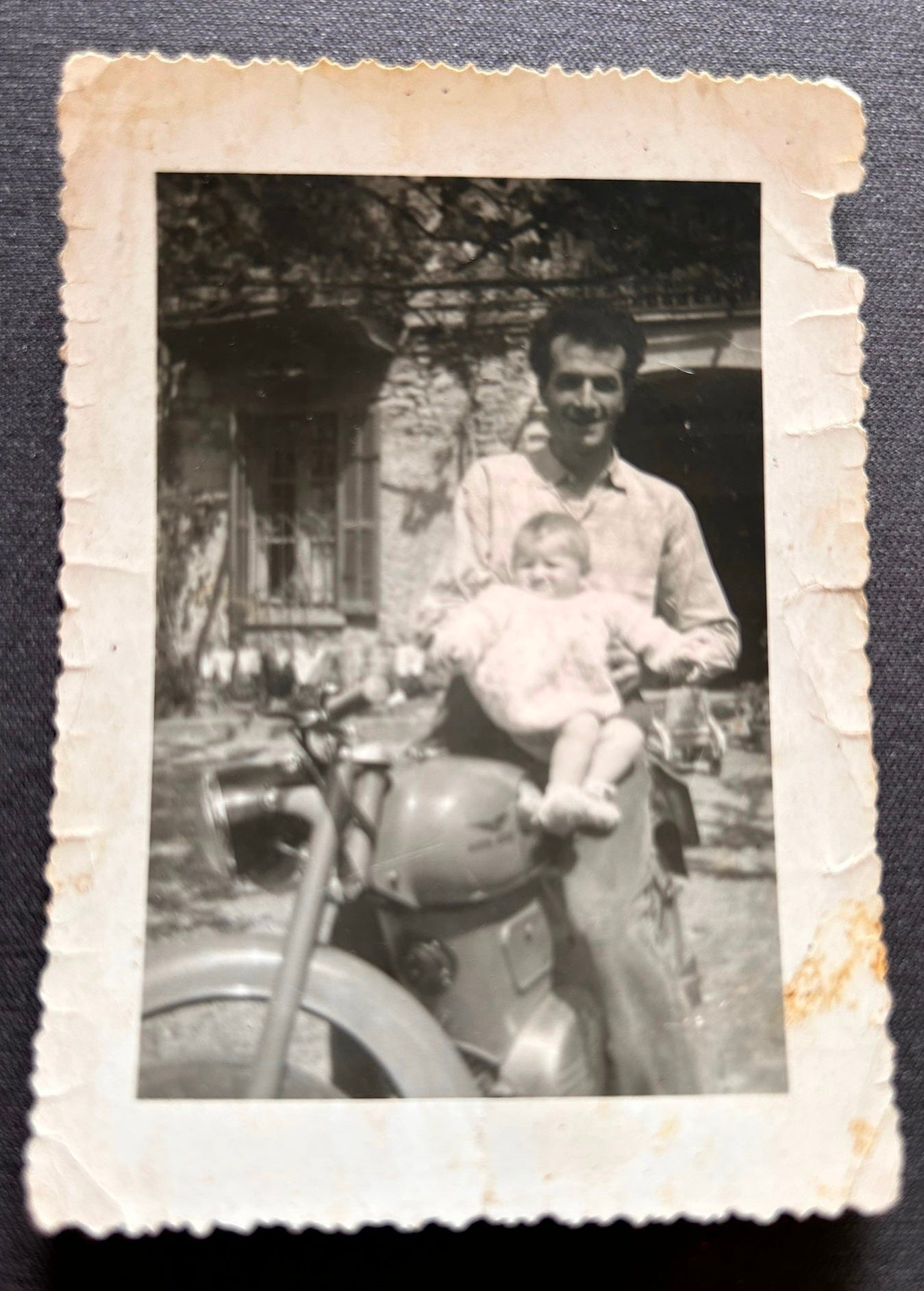
I grew up in relative disadvantage - but a disadvantage that carried within it protections and dignity.
The laughter under the porch in the summer, with mother and her friends. Gina, red lipstick, cheeky and fun, everyone telling stories, preparing food, vegetables from the garden, fresh minestrone every night. The extended family that held its elders precious. An ante litteram feminist space that made me the feminist I became.
A culture of making rooted in centuries of craft – my maternal grandfather a master builder in the tradition of the magistri comacini, the medieval guild of builders from the lakes of northern Italy whose skills built cathedrals across Europe. My paternal grandfather – a farrier in pre-industrial Italy whose craft found new life in the horses and riding schools of a later, wealthier, industrial Italy. One brother set up a construction company now managed by the third generation. Another carried the farrier tradition forward.
The hand-sewn clothes my mother made us, her ability in sewing and embroidery part of the craft traditions that gave the world Benetton, Armani, Prada.
The liberation theology, brought by missionaries passing through the parish that encouraged us to think that building an equitable world was a duty. Its most famous advocate, Hélder Câmara, a catholic priest during the Brazilian military dictatorship of 1964 to 1985, is quoted: ‘when I give food to the poor, they call me a saint – when I ask why they are poor, they call me a communist’4.
Disadvantage gave me a political consciousness and a deep and visceral empathy with injustice. Disadvantage with cultural and political richness woven through it.
All together now?
My response to ageism is who I am - but it is also the result of the accumulated capital of my kind of life.
What happened to the people of the CAB report, I think - what happened to the accumulated capital of their life?
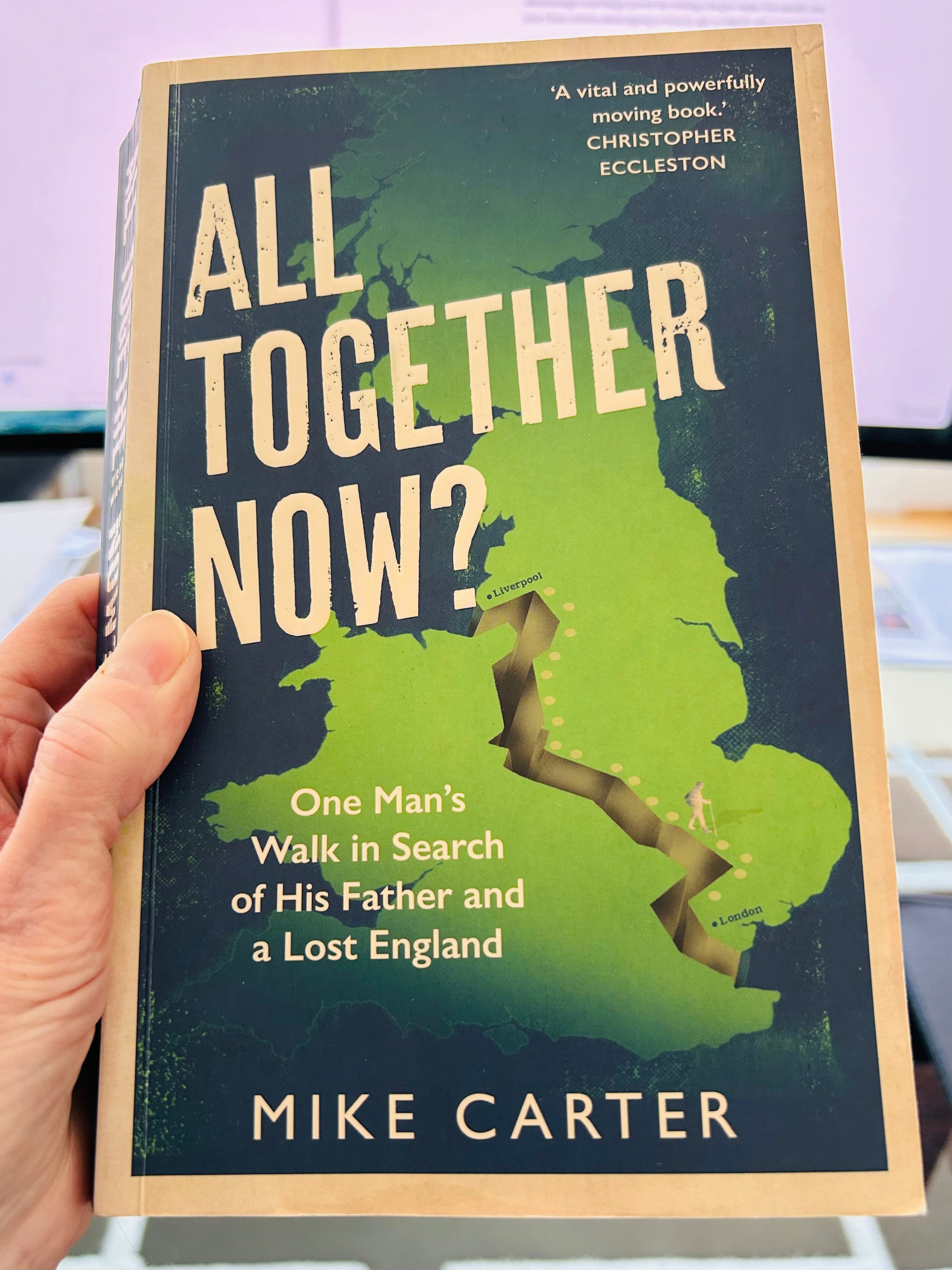
In his ‘one man’s walk in search of his father and a lost England’, journalist Mike Carter takes us on the footsteps of the People’s March for Jobs, organised by his father Pete in 1981.5
The March saw unemployed men and women walk, from Liverpool to London, north to south, a three hundred and forty miles journey, in protest against Margaret Thatcher’s policies, an effort to save their communities and culture.
Walking along with him, north to south, we meet the people of the CAB report.
Such a thing as society
The story starts shortly before the March: at the election of Margaret Thatcher in 1979, her government fuelled by economist Friedrich Hayek’s neoliberalism6.
On coming to power, Hayek’s ideas are immediately enacted: ‘massive tax cuts for the rich, the neutering of trade unions, the sell-off of public housing and state-owned industries, the emasculation of local authorities, outsourcing and competition in public service, the deregulation of the financial markets’ – a brutal list.
With industries and jobs flying out to Asia, communities are eviscerated. Public space soon becomes boarded up high streets populated by pawn shops, bookmakers, money-lenders, charity shops, ‘artery-clogging’ fast-food shops. And buy to let investors ‘devour’ entire streets in already struggling communities.
The world then and the world now
The author tracks some of the people that participated to the March – and obtains from them a testimony of the world then and the world now.
Tara, a nurse, has kept her mug from the People’s March. She has witnessed the shift in the burden of looking after vulnerable people placed on families and unpaid carers. ‘A lot of my clients don’t have families or carers’, Tara says. And adds: ‘They are heartbreakingly isolated, living in poor accommodation in the private sector, in squalor. They end up with depression from the physical, emotional and financial impact on their lives’.
I think of the woman in Knowsley, working since sixteen, nearly 62, no pension – her future as uncertain as her health.
If Tara ‘had her time again’, she says, she might have become a photographer.
‘I’m fifty-one now. It’s probably too late.’
I think of self-directed ageism.
Glenda works for non-profit POhWER – People of Hertfordshire Want Equal Rights. She recalls the banners, the chanting, the huge turnout that greeted the marchers, providing food and drink. A solidarity she no longer sees.
Glenda talks of the struggle of people with disabilities, of the homeless. She talks of local organisations, the Alzheimer’s Society, the Deaf Society, Sight Concern, all funding slashed.
‘Don’t be blind, poor, old, deaf, disabled or have a mental health problem and live in Bedford.’
I think of the 50% of disabled people with no private pension savings by the time they reach 60 with no Alzheimer’s Society, no Deaf Society, no Sight Concern to call upon.
For the few, the same political economy brought ‘obscene wealth.’ The market in private jets, luxury super yachts, cars, watches, handbags, clothing is booming, writes the author. The man in west London driving around in a gold-plated Ferrari, the Mayfair restaurant selling a £9,000 cocktail with ‘lashings of gold’, the tax-dodging exploits of the super-rich. A reality we are familiar with.
A ‘twenty-eight days’ walk through the carnage and despair’, the author concludes, visceral anger rising. And:
‘It is hard to escape the conclusion that the reason the rich have now got so much more is that everybody else has got so much less.’
I think about the people of the CAB report. I think about Hélder Câmara. Mike Carter’s story does not argue. It indicts.7
A paradox of my own making
All Together Now? is the dis/passionate journey through the impact neoliberal policies have had on Britain.
The impact on my adult life has been quite different. A professional life made possible - and easy - by the deregulated labour market Thatcher created. The structure that enabled my success was itself a product of those same neoliberal policies. I must recognise it honestly. And there it is.
Mike Carter has a similar moment of recognition. Referring to 1981 when he had not joined the original marchers, he writes: ‘Maybe, even back then, I could see the futility in the fight. It shames me to think like that now, when others were fighting I was hitching my wagon to Thatcher’s vision. But there it is’.
Poverty, privilege, morality
Moral philosopher Peter Singer’s Famine, Affluence, and Morality describes how civil war in east Bengal, poverty, a cyclone turned nine million people into destitute refugees in the early 70s.8
Britain had given £14,750,000 to the emergency appeal and £275,000,000 to the Concorde project – the absurdity of supersonic transport being valued more than thirty times as highly as the lives of nine million refugees.
Singer’s philosophy is uncompromising. If it is in our power to prevent something bad, we ought to do it until we reach ‘marginal utility’. Then, by giving more, we would hurt ourselves more than we would relieve by our gift. A sliding scale with no comfortable stopping point.
I think about my Jil Sander jewellery. How easy is it to make ourselves comfortable? How easy is it to find our stopping point?
Beauty / Ugliness
I don’t know the people of the CAB report. The State of Ageing pensioner may have been the child living in poverty with the cultural and political richness that gave the strength to go on the People’s March for Jobs.
Yet inequalities, generations after generations, rooted in the politics and economics of late 20th century, the abandonment of communities after deindustrialisation, the uneven geography of globalisation - all described by Mike Carter - have resulted in a miserable present, and little hope for the future.
The CAB gives reformist recommendations - commissioners, strategies, housing standards. Technocratic solutions administered efficiently, advocating for a system that must work better for everyone: necessary yet insufficient without a deeper challenge to the conditions that produce inequality in the first place. Yes to reforms – but are they enough?
Singer’s utilitarian position may challenge privilege – but an ethics that reduces value to measurable outcomes is necessary yet insufficient. Yes to giving – but is it enough?
If we want ageing to be beautiful for everyone, we must address the structural conditions that make it ugly for many. We need more than a personal moral commitment as to what we should do with our resources. We need more than altruism and philanthropy.
We need a reckoning with power, with who benefits from keeping benefit rates low, from insecure employment, from keeping some people poor and allowing others to be obscenely wealthy.
Nobel Prize-winning economist Herbert Simon estimated that at least 90% of what individuals earn in wealthy societies is attributable to ‘social capital’ — the collective infrastructure, institutions and knowledge that society has built over generations. If that is true, the case for redistribution is not charity. It is a debt.
Re-thinking
A year of writing Rethinking Age has allowed me to build a case for ageing fearlessly. I have been writing from a position of privilege. The CAB report has forced me to confront my thinking, my optimism, my fearlessness.
The beauty of ageing cannot be beautiful if it is so for a privileged few only. No dignity for anyone if so many of us are poor.
There is such a thing as society. Ignoring this truth has taken us to the devastating reality of the CAB report.
What kind of society do we want to live in? What kind of society do we want to grow old in?
Fx
References
State of Ageing 2025. Centre for Ageing Better. Available at: ageing-better.org.uk. The report paints a national picture of the older population in England using national data sources, drawing attention to disparities in resources, opportunities and outcomes between different geographic areas. The Centre for Ageing Better is an independent centre of excellence on ageing, working with national, local government, industries, businesses and communities to improve how people experience ageing. Some of their data were shown at the recommended The Coming of Age exhibition which runs at the Wellcome Collection to 29-Nov-2026.
All statistics that follow in This is England are from the State of Ageing 2025 report.
The International Monetary Fund’s World Economic Outlook (April 2026) actually projects the United Kingdom to be fifth in the world by nominal GDP, at an estimated $4,26 trillion. The UK Office of National Statistics reports a Gini coefficient - the standard measure of income inequality within a population, expressed as a percentage between 0 and 100 - of 32.9% for disposable income in the financial year ending 2024 — and 47.6% before taxes and benefits. The system redistributes. But it does not transform.
In an interview with Italian journalist Oriana Fallaci, cited on his Wikipedia page, Hélder Câmara’ stated: ‘My socialism is special, it’s a socialism that respects the human person and goes back to the Gospels. My socialism is justice.’ [Reference 18 of the linked Wikipedia article].
All Together Now? One Man’s Walk in Search of His Father and a Lost England’. Mike Carter. Guardian Faber. 2019.
Margaret Thatcher's neoliberalism drew on Friedrich Hayek's The Constitution of Liberty (1960) and the ideas of Chicago School economist Milton Friedman - as cited in “All Together Now?’ [Footnote 5] and as widely documented.
All references in this essay to All Together Now? - quotations, testimony and data - are drawn from the edition cited in Footnote 5.
Famine, Affluence, and Morality. Peter Singer. 1972. Widely available as a .pdf online. Singer’s use of ‘East Bengal’ is anachronistic - by 1971 the territory was officially East Pakistan. The imprecision may reflect the broader tendency in Western philosophical writing to treat the Global South as an abstract backdrop rather than engaging with the specificity of its history and nationhood. On a separate note, Singer’s moral philosophy became the intellectual scaffolding of the Effective Altruism movement. With its obsession on mathematical measures to weigh good outcomes against bad (a ‘classic example of the follies of philosophy’ in political philosopher John Gray’s comment in Paul Vallely’s Philanthropy - from Aristotle to Zuckerberg (Bloomsbury. 2020. page 689), I ended up losing interest in EA.
brilliant Francesca so true and revealing the lack of humanity in society. Showing us all the selfishness and therefore lack of acknowledging the 'other' in our lives Of being part of the human race and belonging is so difficult in this world I think because of 'FEAR' We often have 'fears' irrational fears but often based on what we hear. read, believe to be 'true' Heaven forbid that we cannot consider what is our belief rather than our expected, shoulds in our lives, that prevent us from realising there are 'facts' and speaking out when we fear the reprisals of the truth.
So powerful !! Fantastic thank you ☺️